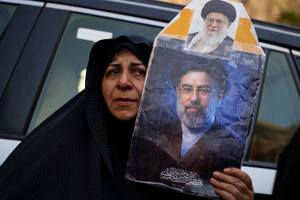
How the world covered it

Iran Supreme Leader Vows Revenge

Iran's new Supreme Leader Mojtaba Khamenei's public vow of revenge for his father's killing — combined with his mysterious absence and shifting leadership role — introduces acute uncertainty about Iran's...

Editorial comparison

Times of Israel frames Mojtaba's absence as leadership liability; Al Jazeera Arabic and Dawn frame his revenge vow as national grievance expression.

Times of Israel leads with Mojtaba Khamenei's absence as signaling a shifting role and potential leadership vulnerability, framing the succession itself as institutionally unstable. This outlet treats the revenge vow as secondary to questions about his authority and command presence.

Al Jazeera Arabic, Dawn, Folha de S.Paulo, The Hindu, and Deutsche Welle report the revenge vow itself, with Mojtaba stating that vengeance is the nation's demand that must be carried out. These outlets treat the statement as an expression of collective Iranian grievance rather than interrogating his personal authority or absence.

Deutsche Welle adds Trump's counterattack threats alongside the revenge vow, contextualizing Iran's statement within ongoing US pressure. La Repubblica (not present in article set but referenced in framing notes) foregrounds Mojtaba's naming of European leaders as personally responsible, a detail absent from other outlets' coverage.
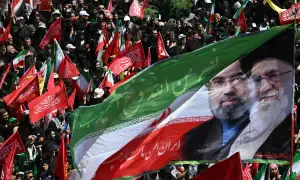
How each outlet opened the story
Dawn Pakistan

Iran's Supreme Leader Mojtaba Khamenei vows revenge

Iran's supreme leader says revenge is nation's demand

The Hindu India

Iran's Supreme Leader vows revenge for father's killing

Deutsche Welle Germany

Iran's Mojtaba Khamenei vows revenge for father's

The Hindu India

Mojtaba vows revenge after Trump's new threat

Mojtaba Khamenei vows revenge as ceasefire hangs in balance

Mojtaba Khamenei's absence signals shifting role for leader

Yahoo Japan Japan

Mojtaba vows to take revenge

Coverage map

What coverage agrees on, contests, or leaves unclear.

Broadly agreed
  • All covering sources confirm Mojtaba Khamenei publicly vowed that revenge for his father's killing is 'the will of our nation' and 'must inevitably be carried out'.
  • Multiple sources confirm Mojtaba's whereabouts are unknown, with his absence described as a growing concern for Iranian institutional coherence.
Contested framing
  • Times of Israel and Korea Herald frame Mojtaba's absence as a leadership liability weakening Iran; Al Jazeera Arabic and Dawn frame his statements as expressions of legitimate national grievance without questioning his authority.
  • Italian La Repubblica foregrounds Mojtaba's naming of European leaders including Meloni as personally responsible; other outlets do not emphasise this list of accused individuals.
Still unclear

Whether Mojtaba Khamenei is incapacitated, in a secure location for security reasons, or deliberately maintaining a low profile for strategic purposes remains publicly unconfirmed.

Notable omissions

People's Daily provides no coverage of Mojtaba Khamenei or Iran's Supreme Leadership succession; TASS avoids analysis of Iranian command authority.

Regional framing

How different outlets describe the same story.

Pakistani

Dawn reports Mojtaba Khamenei vowed revenge for the US-Israeli killing of his father, framing this as a statement of national will rather than personal vendetta.

Brazilian

Folha de S.Paulo reports Mojtaba stated revenge is 'the nation's demand' that must happen, integrating institutional analysis of the new Supreme Leader's legitimacy.

Indian

The Hindu covers Mojtaba's vow and Trump's counter-threat to 'completely destroy' Iran, maintaining balanced non-aligned framing without endorsing either position.

German

Deutsche Welle frames Mojtaba's vow through de-escalatory institutional analysis, emphasising his continued threats alongside Trump's escalatory language.

Emirati

The National frames Mojtaba's vow in the context of the ceasefire hanging in the balance and Gulf states' direct exposure to Iranian retaliation.

Israeli

Times of Israel foregrounds Mojtaba's absence as a 'shifting role' and potential liability for the Islamic Republic, questioning command coherence.

Japanese

Yahoo Japan and Japan Times cover Mojtaba's vow and his mysterious whereabouts as a critical variable for Iranian decision-making authority.

South Korean

Korea Herald frames Mojtaba's absence as becoming 'a liability for the Islamic Republic', citing Reuters analysis of his undisclosed location.

Italian

La Repubblica reports Mojtaba named thirteen world leaders — including Meloni — as criminally responsible, generating domestic political resonance in Italy.

Source trail

Original reporting behind this perspective.

This page maps the coverage. The 13 articles below are the original reports the comparison is drawn from — open them for each publisher's full reporting.

Show 13 source articles
Perspective link copied