
Editorial comparison
Times of Israel and CNN stress Iranian 'vengeance' messaging at funeral; Le Monde and Deutsche Welle foreground parallel diplomatic talks without threat framing—outlets diverge sharply on which narrative dominates.
Times of Israel and CNN lead with Iran's defiant, threatening tone at Khamenei's funeral, emphasizing 'vengeance' rhetoric and the funeral as a show of power directed at Trump. Le Monde and Deutsche Welle instead centre the diplomatic negotiation track in Doha, presenting the funeral and talks as separate processes without characterizing the funeral primarily as a threat signal. The Hindu reports the funeral and separately notes 'positive progress' in US-Iran talks, keeping narratives compartmentalized.
On the talks themselves, outlets fundamentally disagree: Yahoo Japan reports 'no progress,' while The Hindu, Folha de S.Paulo, and Dawn report 'positive progress.' This represents an irreconcilable factual characterization of the same Doha round. Times of Israel frames Netanyahu's 'total victory' pursuit as an ongoing doctrine, while The National and Indian sources implicitly frame the situation through regional stability and collective autonomy rather than Israeli military objectives as the primary lens.
How each outlet opened the story
CNA
Singapore
Iran supreme leader's body arrives at Tehran religious complex
Times of Israel
Israel
Flowers and 'vengeance': Tehran's Grand Mosalla receives Khamenei
The Hindu
India
Iran holds funeral for Ali Khamenei: who is attending
Deutsche Welle
Germany
Iran turns Khamenei funeral into show of power
CNN
USA
Iran sends defiant message to Trump with colossal funeral
Folha de S.Paulo
Brazil
Negotiations between US and Iran will resume after funeral
Coverage map
What coverage agrees on, contests, or leaves unclear.
Broadly agreed
- All sources confirm Khamenei's body arrived at Tehran's Grand Mosalla for a multi-day state funeral beginning around July 4.
- Sources broadly agree that US-Iran indirect talks in Doha made some form of 'positive progress' but no next date was set.
- Multiple sources confirm Iran has warned oil tankers to use approved Hormuz routes or face a 'forceful response.'
Contested framing
- Times of Israel and CNN emphasise Iran's 'vengeance' and defiance messaging at the funeral; Le Monde and Deutsche Welle foreground the diplomatic negotiation track without characterising the funeral as primarily threatening.
- Yahoo Japan reports 'no progress' in US-Iran indirect talks while The Hindu, Folha de S.Paulo, and Dawn report 'positive progress,' reflecting irreconcilable characterisations of the same Doha round.
- Times of Israel frames Netanyahu's 'total victory' pursuit as ongoing doctrine; The National and Indian sources frame the situation through regional collective autonomy rather than Israeli military objectives.
Still unclear
Whether Iran's new leadership after Khamenei will maintain or modify the nuclear negotiating position, and whether the Hormuz standoff will be resolved as part of any deal, remains publicly unconfirmed.
Notable omissions
People's Daily and TASS are silent on the diplomatic substance of US-Iran talks, while Israeli and American sources largely omit discussion of Iranian civilian and economic suffering under the post-war situation.
Regional framing
How different outlets describe the same story.
Singaporean
CNA reports factually on Khamenei's body arriving at Tehran's religious complex with no additional framing, consistent with its terse logistics-first editorial pattern.
Israeli
Times of Israel reports flowers and 'vengeance' messaging at the funeral venue, foregrounding Iran's defiant posture and Netanyahu's claim of 'total victory' pursuit that 'never ends.'
American
CNN frames Iran's funeral as a 'defiant message to Trump,' emphasising the regime's show of power and the tension between the funeral's political symbolism and ongoing negotiations.
German
Deutsche Welle frames the funeral as a 'show of power' by a regime appearing united, while also noting the endurance framing of negotiations and the Hormuz standoff as an energy infrastructure problem.
Indian
The Hindu reports 'positive progress' in US-Iran Doha talks, foregrounding Pakistan PM Sharif's attendance at the funeral and emphasising regional diplomatic positioning without Western-alignment framing.
Brazilian
Folha de S.Paulo reports negotiations will resume after the funeral with 'positive progress,' framing the diplomacy as a structural institutional process.
French
Le Monde analyzes US-Iran negotiations as stalled specifically around the Strait of Hormuz's future, with expert interpretation of both sides' institutional constraints.
Italian
La Repubblica frames the funeral as a display of regime unity with 'we must rebel' messaging, noting the regime's attempt to project cohesion despite internal pressures.
Pakistani
Dawn reports PM Sharif will attend the funeral and that US-Iran Doha talks made 'positive progress,' positioning Pakistan as a regional diplomatic actor.
Japanese
Yahoo Japan reports no progress in US-Iran indirect talks, reflecting the Japanese concern with energy supply chain stability through the Hormuz region.
Source trail
Original reporting behind this perspective.
This page maps the coverage. The 16 articles below are the original reports the comparison is drawn from — open them for each publisher's full reporting.
Show 16 source articles
Flowers and ‘vengeance’: Tehran’s Grand Mosalla receives Khamenei’s body ahead of funeral - The Times of Israel
Flowers and ‘vengeance’: Tehran’s Grand Mosalla receives Khamenei’s body ahead of funeral The Times of Israel
Iran holds funeral for Ali Khamenei: Who is attending?
Ayatollah Ali Khamenei was killed on February 28, 2026, in joint precision strikes by the US and Israeli militaries. The airstrikes killed Khamenei as well as other members of his family.

West Asia war LIVE: Supreme Leader Khamenei's body arrives at Tehran religious complex for funeral, says state media
"The body of the martyred Leader of the Islamic Revolution has arrived at the Imam Khomeini Grand Mosalla," IRNA wrote on Telegram, using the complex's official name
Iran turns Khamenei funeral into show of power
Iran's leadership is planning a six-day funeral for Ayatollah Ali Khamenei starting July 4, in what officials say will be the largest gathering in Tehran's history — and a demonstration of strength at home and abroad.
Iran sends defiant message to Trump with colossal funeral for slain Supreme Leader Ali Khamenei - CNN
Iran sends defiant message to Trump with colossal funeral for slain Supreme Leader Ali Khamenei CNN
‘Positive progress’ made in U.S.-Iran talks in Doha: Qatar, Pakistan
Though the next date of talks was not announced, it was decided to continue discussions after the funeral of former Iranian Supreme Leader Ayatollah Ali Khamenei

Negotiations between US and Iran will resume after Ali Khamenei's funeral
Negotiators from the United States and Iran made "positive progress" during a new round of indirect negotiations in Doha, officials from Qatar, one of the countries mediating…
Iran, the show of strength at Khamenei's funeral: "We must rebel"
The funeral program is underway and will have its highlight on Saturday. The regime appears united and tries to overcome the farewell to Khomeini
The expert: "Difficult negotiations, USA and Tehran want to demonstrate that they have won"
The analyst from Qatar University: "For Doha the objective has always been stability, but the Pasdaran cannot take for granted that they have control of Hormuz"
Where the U.S. and Iran stand after Doha negotiations
A look at what is known to have come out of the latest round of Iran and U.S. indirect talks in Doha.
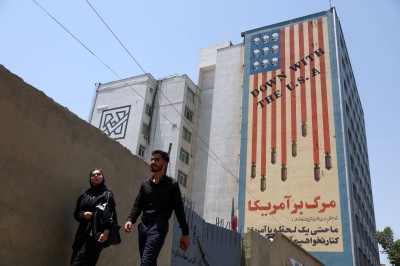
Pakistan PM Shehbaz Sharif to attend Iran supreme leader Ali Khamenei's funeral
Pakistan’s Prime Minister Shehbaz Sharif to attend Iranian supreme leader Ali Khamenei’s funeral from July 3-5 amid regional mediations

FO says PM to visit Iran, Turkiye from July 3-5; to attend funeral of assassinated Iranian supreme leader
Prime Minister Shehbaz Sharif will visit Iran and Turkiye from July 3 to July 5, Foreign Office (FO) spokesperson Tahir Andrabi confirmed on Thursday. Addressing a weekly briefing, Andrabi said that during his visit to…
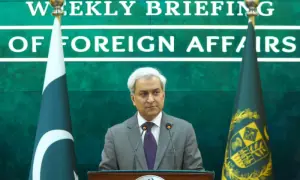
Negotiations between Iran and the United States stalled around the future of the Strait of Hormuz
Since the signing of the memorandum of understanding between Washington and Tehran in mid-June, no in-depth discussions regarding the future of the Iranian nuclear program have been initiated. The Islamic Republic seems to want…
Iran says it won’t meet with US envoys, clouding prospects for peace deal - The Times of Israel
Iran says it won’t meet with US envoys, clouding prospects for peace deal The Times of Israel
US, Iran wrap up indirect Doha talks as Trump touts progress towards ‘denuclearization’ - The Times of Israel
US, Iran wrap up indirect Doha talks as Trump touts progress towards ‘denuclearization’ The Times of Israel