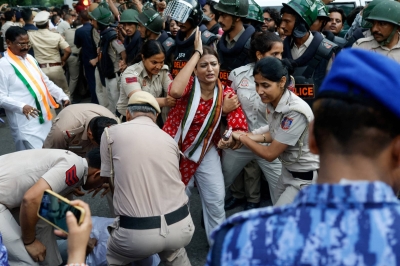
India opposition leader Rahul Gandhi released after protest detention
Protests led by the Cockroach Janta Party (CJP) movement have emerged as one of the biggest challenges to Modi's government since his re-election in 2024.

India's largest youth-led protest movement since Modi came to power has resulted in police violence, the detention of opposition leader Rahul Gandhi, and systemic challenges to Modi's government that could...
Deutsche Welle and Japan Times frame the movement as originating in education system grievances over exam leaks and broadening to wider youth anger over jobs and economic prospects. Deutsche Welle emphasizes this trajectory explicitly: "What started as a satirical protest against exam leaks in India has grown into a wider movement." Daily Sabah frames the story primarily through institutional police crackdown accountability, reporting that supporters vowed to continue protests after police used tear gas.
BBC News focuses on civilian injury documentation and protocol violation, reporting that Delhi witnessed "overwhelming violence" with at least 60 protesters wounded. Folha de S.Paulo integrates individual suffering with systemic inequality analysis, centering the detention of opposition leader Rahul Gandhi as part of broader state repression. CNA and Dawn both report Gandhi's detention and release as the headline event, positioning the movement through institutional political consequences rather than underlying grievances.
India opposition leader Rahul Gandhi released protest detention
Police detain opposition leader India amid government tension
India's cockroach protest continues after police crackdown
India's youth-led Cockroach movement challenges Modi
India's police crackdown further fuels Cockroach protests
Indian opposition leader Rahul Gandhi arrested Modi residence
Whether the movement will translate into durable electoral opposition gains ahead of the 2027 elections, or whether the government's crackdown will suppress it, is not confirmed by any source.
People's Daily carries no coverage of India's internal protest movement, consistent with its pattern of avoiding coverage critical of allied governments.
CNA reports Rahul Gandhi's release after protest detention, noting the Cockroach Janta Party movement as one of the biggest challenges to Modi's government, framed factually without political positioning.
Folha de S.Paulo integrates individual testimony with structural analysis, framing Gandhi's detention as evidence of institutional repression within a broader systemic inequality critique.
BBC documents the protest continuation a day after police crackdown, recording at least 60 protesters wounded and 118 police injured, with institutional accountability framing.
Deutsche Welle contextualises the Cockroach movement as a youth-led challenge to Modi emerging from exam leak protests, describing it as an articulation of wider anger over education and governance failures.
Daily Sabah notes India's police crackdown further fuelling the movement, positioning it as an institutional authority friction story with explicit accountability emphasis.
Dawn reports Rahul Gandhi's arrest outside PM Modi's residence amid mass protest, framing it through South Asian regional democratic accountability lens.
Japan Times frames the protests as giving the opposition a rare political opening against Modi, emphasising the electoral and youth voter mobilisation implications.
This page maps the coverage. The 9 articles below are the original reports the comparison is drawn from — open them for each publisher's full reporting.
Protests led by the Cockroach Janta Party (CJP) movement have emerged as one of the biggest challenges to Modi's government since his re-election in 2024.
Indian police briefly detained the country's main opposition leader Rahul Gandhi and his sister, Priyanka Gandhi Vadra, this Tuesday (21), while the two held a protest in front of the Indian's residence.
Delhi witnessed overwhelming violence on Monday, with at least 60 protesters wounded. Police said 118 of their men were also injured.

Thousands of mostly young people tried to march on India's parliament to demand changes to how the education system is run.

What started as a satirical protest against exam leaks in India has grown into a wider movement voicing young Indians' anger over jobs and education.
Supporters of India's youth-led Cockroach movement vowed Tuesday to continue their protest in New Delhi, a day after police used tear gas and batons to break up a march toward...
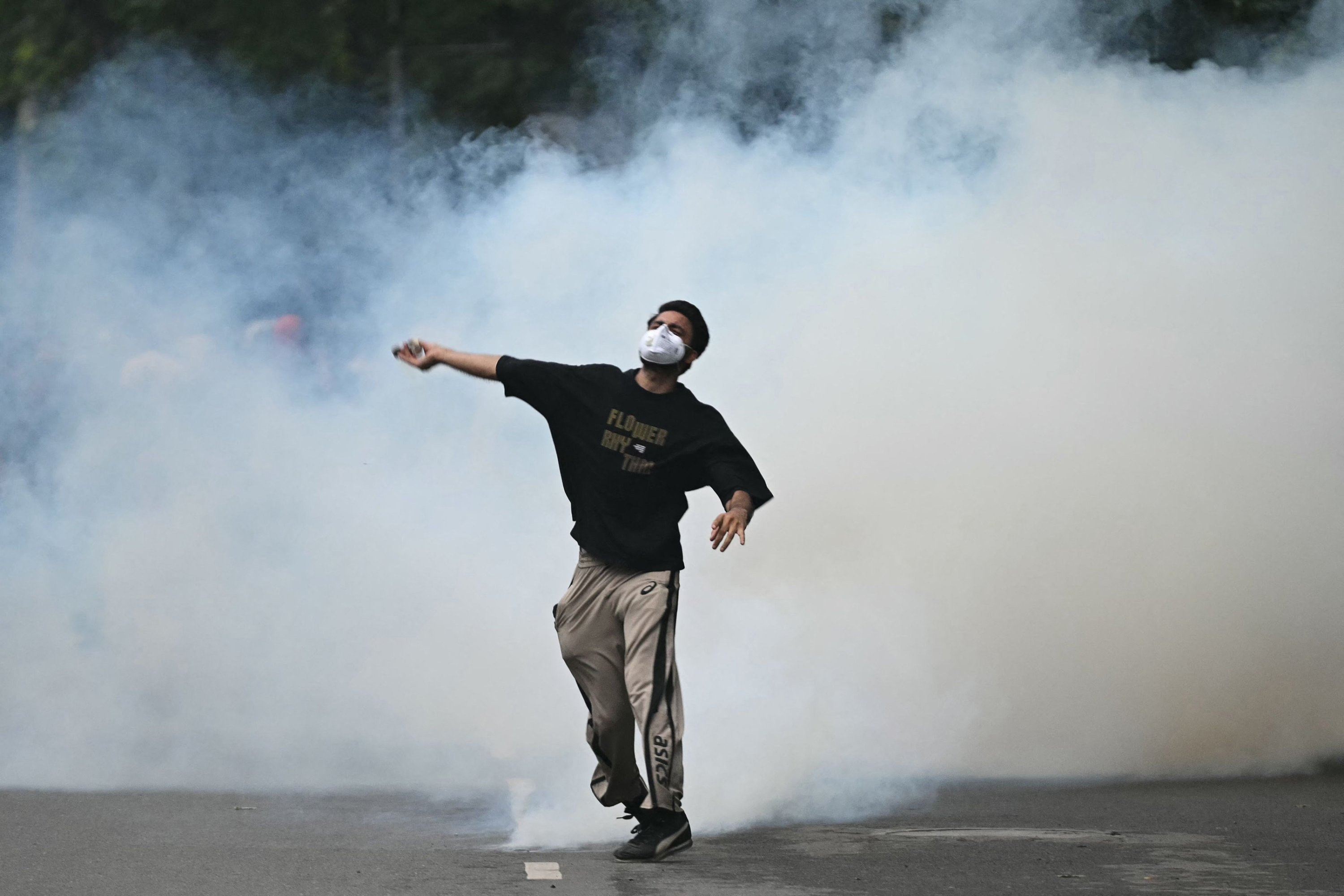
Rahul Gandhi and other leaders of the main opposition Congress party have been dragged away by police from a rally outside PM Narendra Modi's residence, a day after dozens of youth protesters were arrested.
Delhi Police on Tuesday detained Indian opposition leader Rahul Gandhi and his sister and fellow lawmaker, Priyanka Gandhi, as well as the Samajwadi Party chief Akhilesh Yadav from a protest site outside Prime Minister…
The show of solidarity with protesters could help opposition parties win valuable young voters and broaden the appeal of the Cockroach Janta Party.