How the world covered it

China Tech and Trade Expansion

China expelled a senior Politburo member for graft, posted better-than-expected June trade figures buoyed by an AI boom, and saw Huawei build an $11 billion clean energy empire in emerging markets — while the...

Editorial comparison

Coverage converges on China's expulsion of Politburo member and trade growth but diverges on Huawei expansion framing and US policy motivation.

CNA reports Ma Xingrui's expulsion from Communist Party factually as third Politburo member under investigation in current term. People's Daily does not appear in coverage of this internal party discipline matter, suggesting selective reporting on institutional accountability.

SCMP frames Huawei's $11 billion clean energy expansion as rational strategic adaptation to Western hostility, positioning market opportunity in emerging markets (Brazil) as consequence of US-Europe closure. Japan Times frames Huawei expansion through market opportunity analysis without moral or strategic antagonism framing, treating it as commercial diversification.

US policy context framed by SCMP reports NSF bans on Chinese research institution collaborations as security-motivated action. Pentagon's $25 million rare earths investment (SCMP) is reported as counter-strategy to supply chain vulnerability. This creates asymmetric framing: Huawei's emerging market expansion as market opportunity; US restrictions as security precaution.

How each outlet opened the story
CNA Singapore

China expels former Politburo member Ma Xingrui after graft probe

CNA Singapore

China's June trade tops forecasts buoyed by AI boom

Japan Times Japan

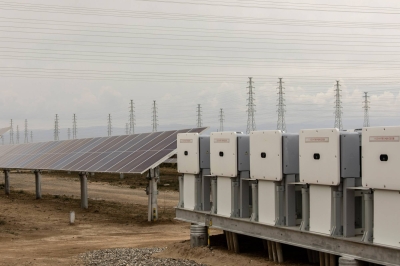
Huawei's 11 billion clean energy empire is opening new markets

US National Science Foundation to ban projects with flagged Chinese institutions

Pentagon invests US$25 million into rare earths start-up ReElement

Coverage map

What coverage agrees on, contests, or leaves unclear.

Broadly agreed
  • SCMP and CNA confirm China's June trade figures exceeded forecasts, buoyed by AI-related demand.
  • Multiple sources confirm Huawei has built an $11 billion clean energy business targeting emerging markets.
Contested framing
  • SCMP frames Huawei's expansion as a rational strategic adaptation to Western hostility; Japan Times frames it through market opportunity analysis without moral framing; US policy context frames it as a security concern addressed by NSF bans.
  • China's expulsion of senior Politburo member Ma Xingrui is reported factually by CNA; People's Daily does not appear in available articles with coverage of this internal party discipline matter.
Still unclear

The full scope of the NSF ban on Chinese institutional collaborations — specifically which institutions are designated and on what criteria — has not been publicly detailed.

Notable omissions

People's Daily does not cover the expulsion of Ma Xingrui from the Communist Party in available articles, consistent with its pattern of avoiding coverage of internal party discipline failures.

Regional framing

How different outlets describe the same story.

Chinese

SCMP frames China's trade outperformance as driven by the AI boom and reports Huawei's clean energy expansion into emerging markets like Brazil as a strategic response to Western hostility — treating it as a structural adaptation rather than a retreat.

Singaporean

CNA reports China's June trade figures topping forecasts as a factual supply-chain consequence item, consistent with its terse operational framing.

Japanese

Japan Times analyses Huawei's clean energy empire as a market-opening strategy, noting Brazil and other emerging markets are becoming increasingly important as the US and Europe become more hostile.

Source trail

Original reporting behind this perspective.

This page maps the coverage. The 5 articles below are the original reports the comparison is drawn from — open them for each publisher's full reporting.

Show 5 source articles
Perspective link copied