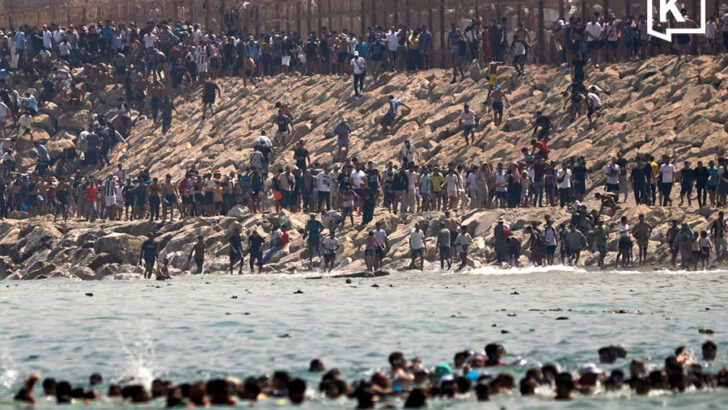
Spain's PM blames traffickers after 60,000 migrants reach Ceuta from Morocco
Spain said most had returned to Morocco by Friday evening, as Italy suspended its Schengen agreement on free movement with Madrid.

The sudden crossing of approximately 60,000 migrants from Morocco into Spain's enclave of Ceuta caused at least 57 deaths, triggered Italy to suspend its Schengen agreement with Spain, and ignited a major EU...
Le Monde characterizes Italy's suspension of Schengen with Spain as political exploitation of the crisis by Giorgia Meloni's government. La Repubblica includes Oscar Camps arguing that EU migration policy—paying third countries to stop migrants—created the structural conditions for the surge, while also reporting that Spanish PM Sánchez attributes the crisis to criminal networks manipulating a recent court ruling on deportation procedures.
BBC and The Hindu center Spain's government attribution to traffickers exploiting a Spanish Supreme Court decision limiting immediate border returns. BBC reports Spain's claim that most of the 60,000 migrants had returned to Morocco by Friday evening. La Repubblica presents direct quotes from migrants in Ceuta saying "We seek freedom," adding a ground-level perspective absent from other outlets' institutional framing.
The actual total death toll beyond the 57 confirmed figure remains uncertain, with Spanish authorities expressing fears the number will increase as bodies are recovered.
African outlet perspectives on the crisis are almost entirely absent; the experiences of the migrants themselves and conditions in Morocco's Fnideq staging area receive minimal sustained coverage beyond brief mentions.
BBC News reports Spain's PM blaming criminal trafficking networks and a recent Supreme Court ruling, focusing on institutional accountability and civilian consequence documentation with death toll emphasis.
Le Monde frames the crisis as a test of Spain under fire from the global right, with Italy and Giorgia Meloni's government among those attacking Sánchez, analyzed through elite institutional competence and European solidarity lens.
La Repubblica reports Italy suspending Schengen with Spain, frames the crisis as exposing EU structural failure to address migration causes, and includes Oscar Camps of Open Arms criticizing EU policy of paying third countries to stop migrants.
Daily Sabah frames the crisis through institutional accountability mechanisms, noting the future Gaza administration will review financial commitments, and links migration to Turkish humanitarian positioning in the region.
CNN explains what Ceuta is and why migrants are going there, presenting a factual backgrounder rather than political framing, consistent with foregrounding US-relevant context.
El Tiempo provides detailed geographic and historical explainers on Ceuta, diplomatic clash framing between EU countries, and reports US blaming Spain's 'far-left' policies, maintaining an international observer perspective.
SCMP and Straits Times report France and Italy tightening borders and Italy's Schengen suspension, framing it through institutional resilience and regional logistics disruption.
Folha de S.Paulo frames the crisis through opportunism and political exploitation by the European right, integrating historical context on Ceuta's colonial status with humanistic consequence framing.
Dawn reports Italy suspending the Schengen agreement with Spain as a factual governance development, framing it through institutional procedure change.
Khaosod English provides a factual AP-sourced explainer on Ceuta for a Southeast Asian audience with minimal editorial framing.
Daily Maverick reports on migrants torching vehicles and thousands still gathering near the Ceuta border overnight, emphasizing the ongoing chaos and security failure.
This page maps the coverage. The 31 articles below are the original reports the comparison is drawn from — open them for each publisher's full reporting.
Spain said most had returned to Morocco by Friday evening, as Italy suspended its Schengen agreement on free movement with Madrid.
While most of the 50,000 people who entered the Spanish enclave in Morocco on Thursday July 30 have already left, Giorgia Meloni's Italy wants to suspend Spain from the Schengen area.
A Spanish Supreme Court ruled earlier this month that immediate returns of migrants crossing the border illegally did not apply to those arriving by sea

Spain and Morocco reinforced the blockades on the Ceuta border this Friday (31) and, apparently, managed to contain the mass crossings, after tens of thousands of people arrived on Spanish territory...
Giorgia Meloni and Mette Frederiksen called for the suspension of the Schengen Area in Spain in reaction to news that tens of thousands of immigrants invaded Ceuta, an exclave of the European country in northern Morocco. THE…
History with strong contours of legend, it is said that the Portuguese soldier and nobleman Pedro de Meneses (1367-1437) played shock when he heard the then king of Portugal, Dom João 1º (1357-1433), grappling with the decision of who…
Tension in the Spanish exclave: police everywhere, people fleeing and attacks for food. Sánchez arrives: "It's the mafia's fault."
The founder of Open Arms: “The EU chose to pay third countries to stop people before they reached our borders, instead of addressing the causes that force millions of human beings to flee”
The sovereignist executives against Madrid, but Europe denies: "There are no new flows towards us". Macron's support
For a month in stopovers and port checks on non-European citizens arriving from Spain. Palazzo Chigi: "We protect security".
Russia and Israel are also riding the momentum The irony of the Kremlin: “They will solve everything thanks to their humanitarian standards”
The Foreign Minister of the Democratic Party: "It was a gigantic operation by the right to denigrate Sánchez who behaved like a statesman, unlike the leader Meloni"
Italy’s Prime Minister Giorgia Meloni said the measure was adopted to safeguard national security and prevent “possible repercussions on our nations.” The post Italy suspends Schengen free-travel pact with Spain over…
Italy said on Friday it was suspending the EU’s border-free Schengen arrangements with Spain for one month in response to a mass influx of migrants into the Spanish enclave of Ceuta from neighbouring Morocco. Italy…

Spain's government said that an estimated 48,300 migrants were back in Morocco on Friday evening. Italy has temporarily suspended its Schengen free-travel pact with Spain.
Thousands of people continued pouring into Ceuta from Morocco during the night, after Spanish police lost control of the border. The head of the city government estimated that 60,000 people had entered.
Thousands of migrants streamed into the Moroccan town of Fnideq near the border with Ceuta overnight, despite a reinforced deployment of security that foiled most attempts to cross into the Spanish enclave.

The European Commission on Friday cautioned against speculation over possible action under the Schengen evaluation mechanism following a surge in irregular migrant crossings into S...
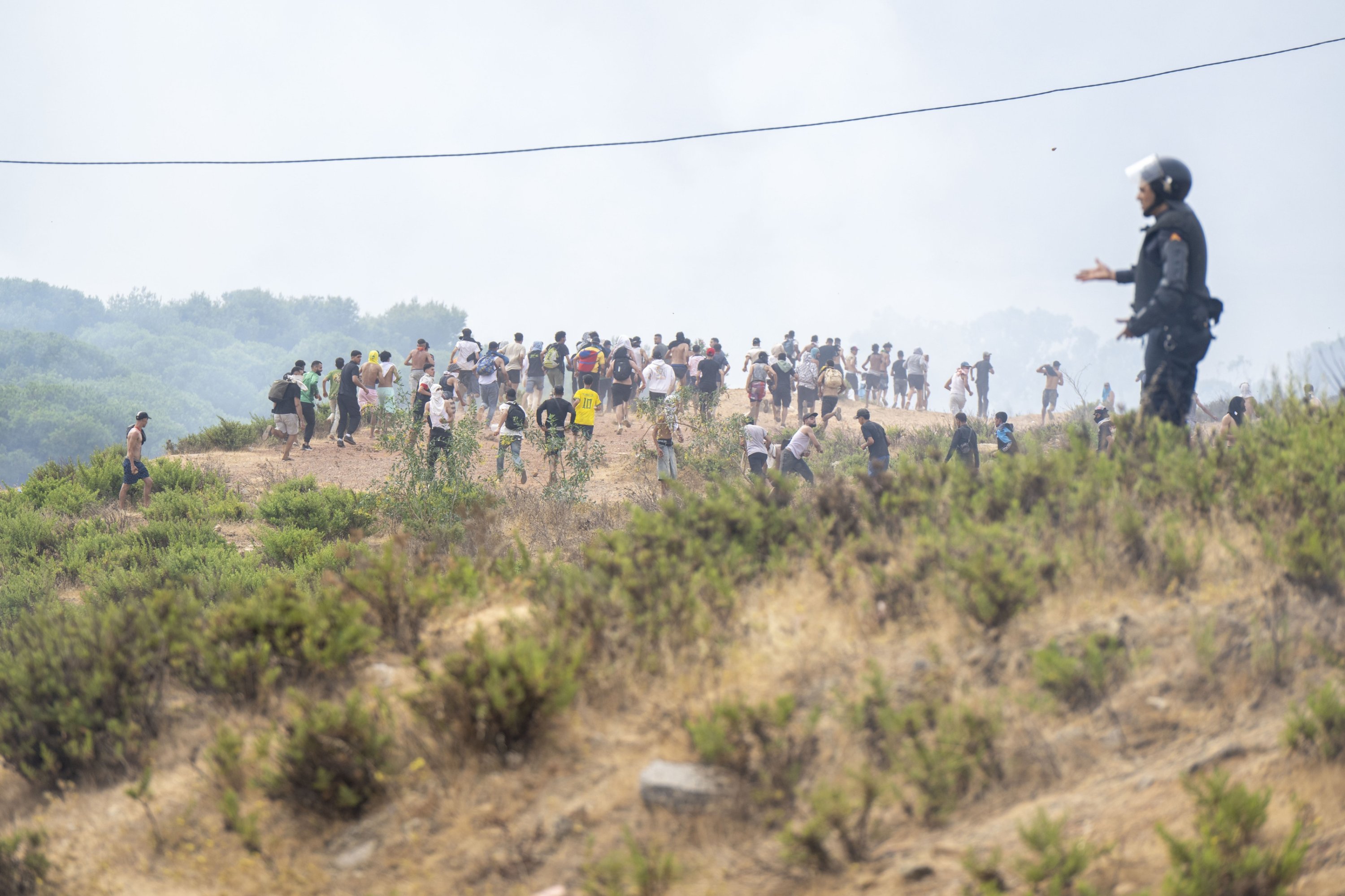
France and Italy bolstered border controls on Saturday after about 60,000 people crossed into Spain’s enclave in North Africa, sparking one of the largest migrant crises for the European Union in recent years. The…

Several protesters performed Nazi salutes, some openly and without covering their faces.
Far-right Prime Minister Giorgia Meloni called the one-month suspension an “extraordinary measure”.
Italy has suspended its Schengen agreement with Spain, Italy’s Foreign Minister Antonio Tajani said on Friday, calling the measure “unavoidable”. “The temporary suspension of Schengen with Spain is a necessary choice to…
This episode is part of one of the worst crises that the autonomous city of barely 84,000 inhabitants has experienced in recent years.

According to Spanish authorities, the crisis has caused at least 57 deaths, but there are fears that the number will increase.
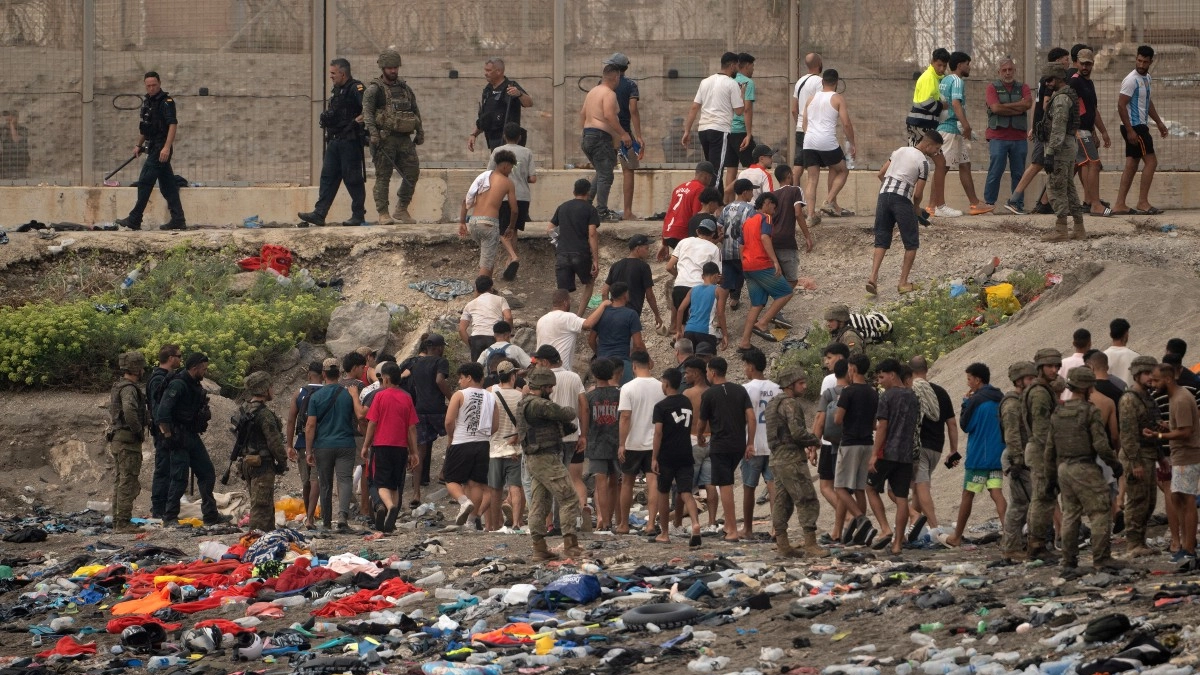
This territory has an approximate population of 85,000 inhabitants and is a reference point for the lines that connect Asia with Europe and America.
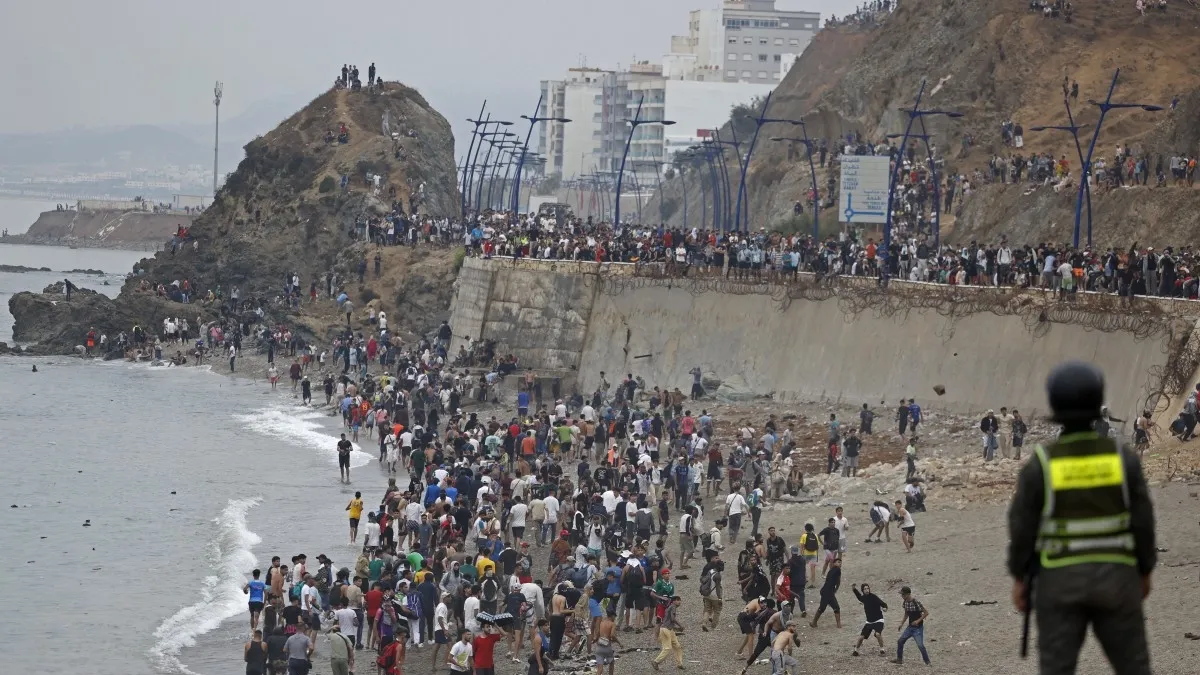
The massive arrival of migrants from Morocco triggered a security response and a diplomatic dispute within the European Union. ABC.

The President of the Spanish Government, Pedro Sánchez, will travel to Ceuta this Friday to learn about the situation on the ground.

The Spanish Executive reinforces security with military support and coordinates with Rabat the return of those who entered irregularly.
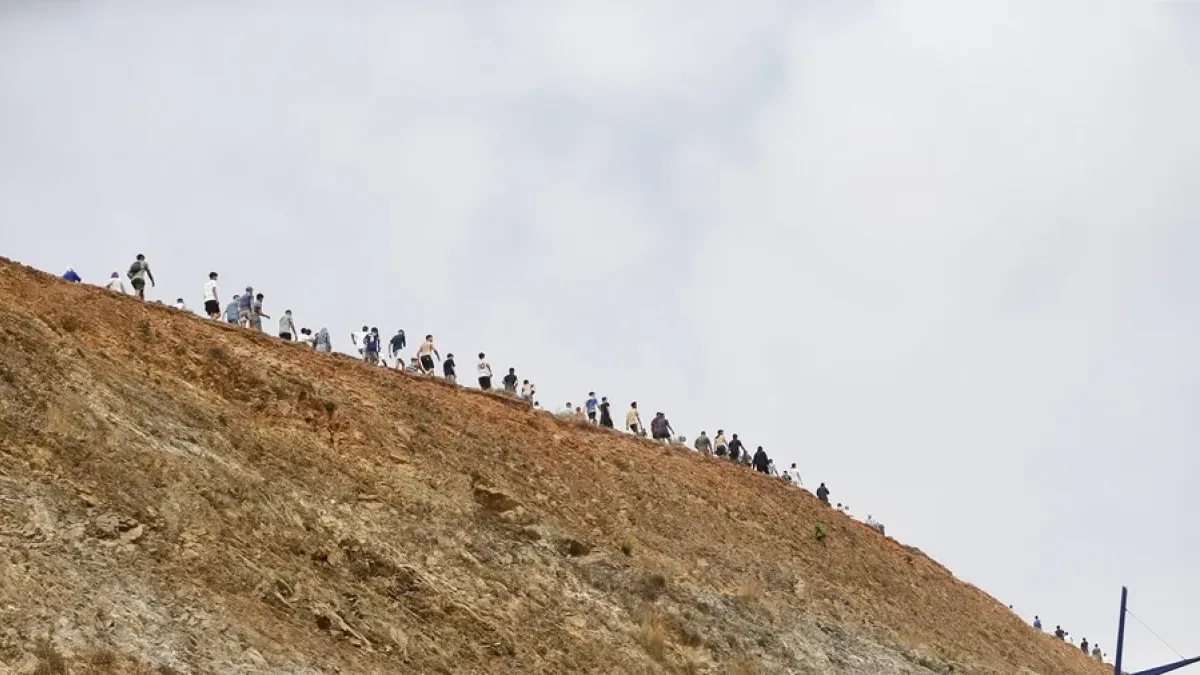
The official met with the Minister of the Interior, Matteo Piantedosi, and the relevant organizations are being summoned.

What is Ceuta and why are migrants going there in large numbers? CNN
MADRID (AP) — Thousands of migrants have streamed into the tiny Spanish territory of Ceuta in North Africa from Morocco, with at least 18 dying in the attempt, prompting Spain to deploy its military to restore the…