How Spain's migrant crisis created a political storm - whipped up by social media
The Ceuta crossings have shaken Europe politically, exposing divisions over the sensitive issue of migration, the BBC's Sarah Rainsford writes.

The crossing of approximately 60,000 migrants from Morocco into the Spanish enclave of Ceuta in under 24 hours — the largest such surge on record — has triggered EU emergency meetings, Italy's suspension of...
BBC News emphasizes political divisions exposed by the crossings and social media's role in amplifying the crisis, centering the institutional fracture within Europe. BBC also reports Spain blaming traffickers and Italy suspending Schengen with Spain, framing this as inter-EU tension. Le Monde similarly treats institutional failure as primary. Times of Israel publishes an opinion piece stating Spain has 'lost Ceuta' and implying Morocco should 'finish the job'—a territorial framing absent from European outlets.
Daily Sabah reports the death toll (67) and Spain's operational response (floating barriers), treating this as a border management crisis requiring accountability for deaths and control measures. La Repubblica reports Italian right-wing voices calling it 'premeditated occupation' while simultaneously quoting former EU High Representative Borrell and Sant'Egidio's founder framing anti-migrant barriers as EU solidarity failures—directly opposed voices within the same outlet. The Hindu provides geographical and political context on Ceuta itself.
Migrant crisis created political storm whipped up by social media
EU calls emergency meeting to discuss Ceuta migrant crossings
Spain's PM blames traffickers after 60,000 migrants reach Ceuta
Spain erects floating barrier in Ceuta after deadly border rush
Death toll climbs to 67 in Ceuta border crisis with Morocco
Deadly rush to Spain's Ceuta exposes desperation of Morocco's young
Ceuta witnessed one of its largest migration crises
Spain to put containment fence on Ceuta's border with Morocco
Whether Morocco deliberately facilitated the surge as political leverage, or whether human trafficking networks exploited a temporary enforcement gap, remains officially unverified.
TASS, People's Daily, and most African outlets are silent on Ceuta; the economic conditions in northern Morocco driving migration — as opposed to the European political reaction — receive limited coverage outside Le Monde's Fnideq reporting.
BBC examines how social media amplified the crisis and created a political storm, and how it exposed EU divisions, with careful institutional interrogation of Spain's response and trafficker networks.
Le Monde covers the disillusionment of young Moroccans in Fnideq after the crossing, focusing on humanistic depth and the elite political fractures between EU states.
Daily Sabah documents the rising death toll at 67, frames it as institutional violence through border management failure, and profiles desperate young Moroccans as victims of structural failure.
La Repubblica features right-wing political exploitation — Feijóo calling it a 'premeditated occupation of European soil' — and Borrell warning that illegal Schengen suspension threatens EU collapse; former minister of Sant'Egidio argues Europe needs migrants.
Folha de S.Paulo reports migrants returning to Morocco after facing hunger and hostility, and Spain installing the 500-metre floating sea barrier, with humanistic consequence framing.
The Hindu provides photojournalistic framing of 'the long swim to Ceuta' and factual reporting on Spain's containment fence plans, noting the 67 deaths.
Straits Times reports the majority of EU countries calling for talks, framing it through institutional logistics and regional resilience without ideological positioning.
Yahoo Japan briefly notes most illegal immigrants from Spanish enclaves have returned home, maintaining factual minimal-framing approach.
This page maps the coverage. The 32 articles below are the original reports the comparison is drawn from — open them for each publisher's full reporting.
The Ceuta crossings have shaken Europe politically, exposing divisions over the sensitive issue of migration, the BBC's Sarah Rainsford writes.
There have been tense exchanges between Spain and other EU states over the influx of migrants into the enclave of Ceuta.

Spain said most had returned to Morocco by Friday evening, as Italy suspended its Schengen agreement on free movement with Madrid.

Spain said migrant crossings into its North African enclave of Ceuta had come to a halt overnight as authorities on Saturday began installing a 500-meter (1,640-foot) floating barr...
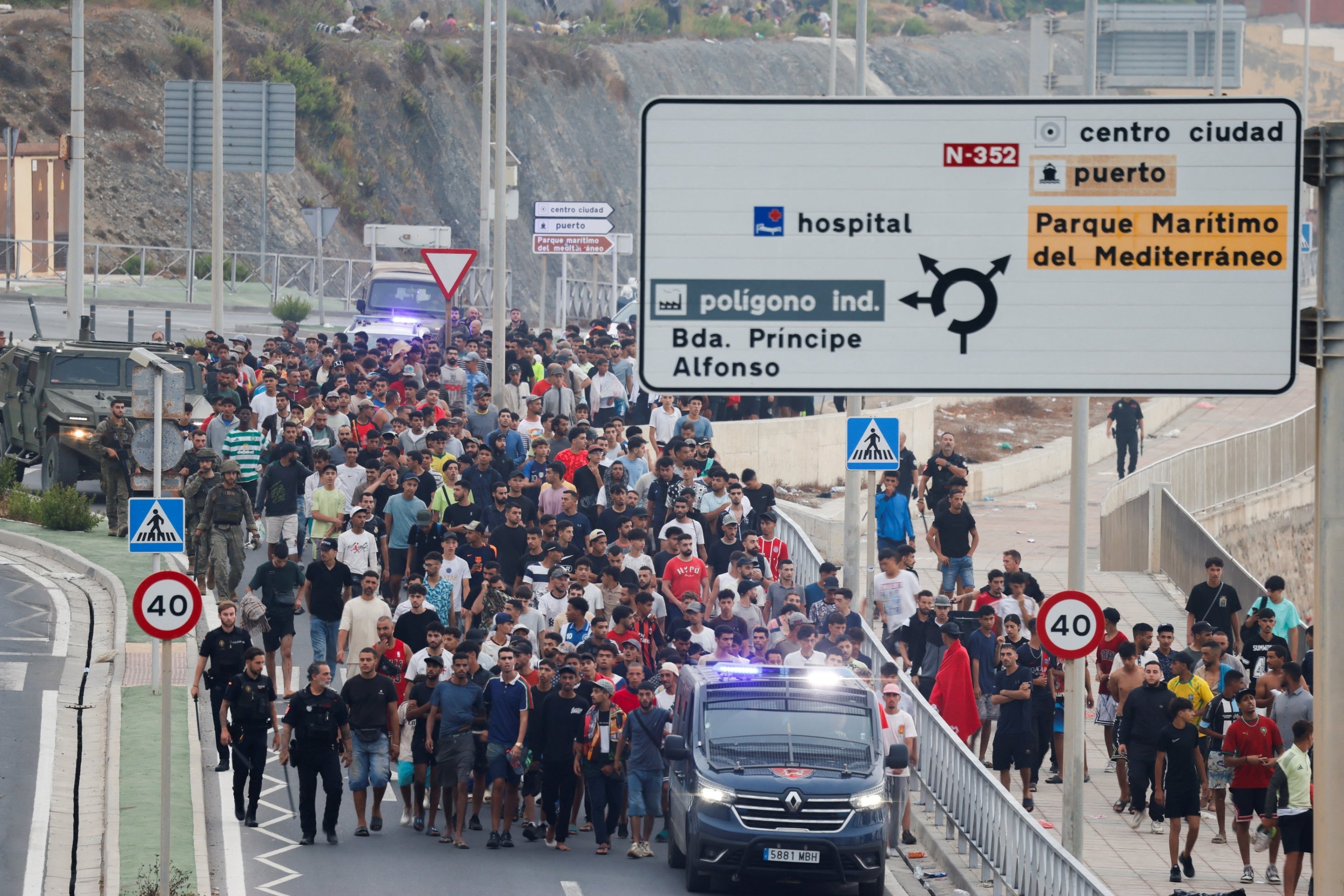
The death toll from the border crisis in Spain's North African enclave of Ceuta rose to 67 on Saturday, Spanish authorities said. The victims included migrants who drowned and...

When Abdulah Buji heard that the border had been breached, he jumped on his motorbike and sped from his home in northern Morocco to Ceuta, joining tens of thousands of people who t...
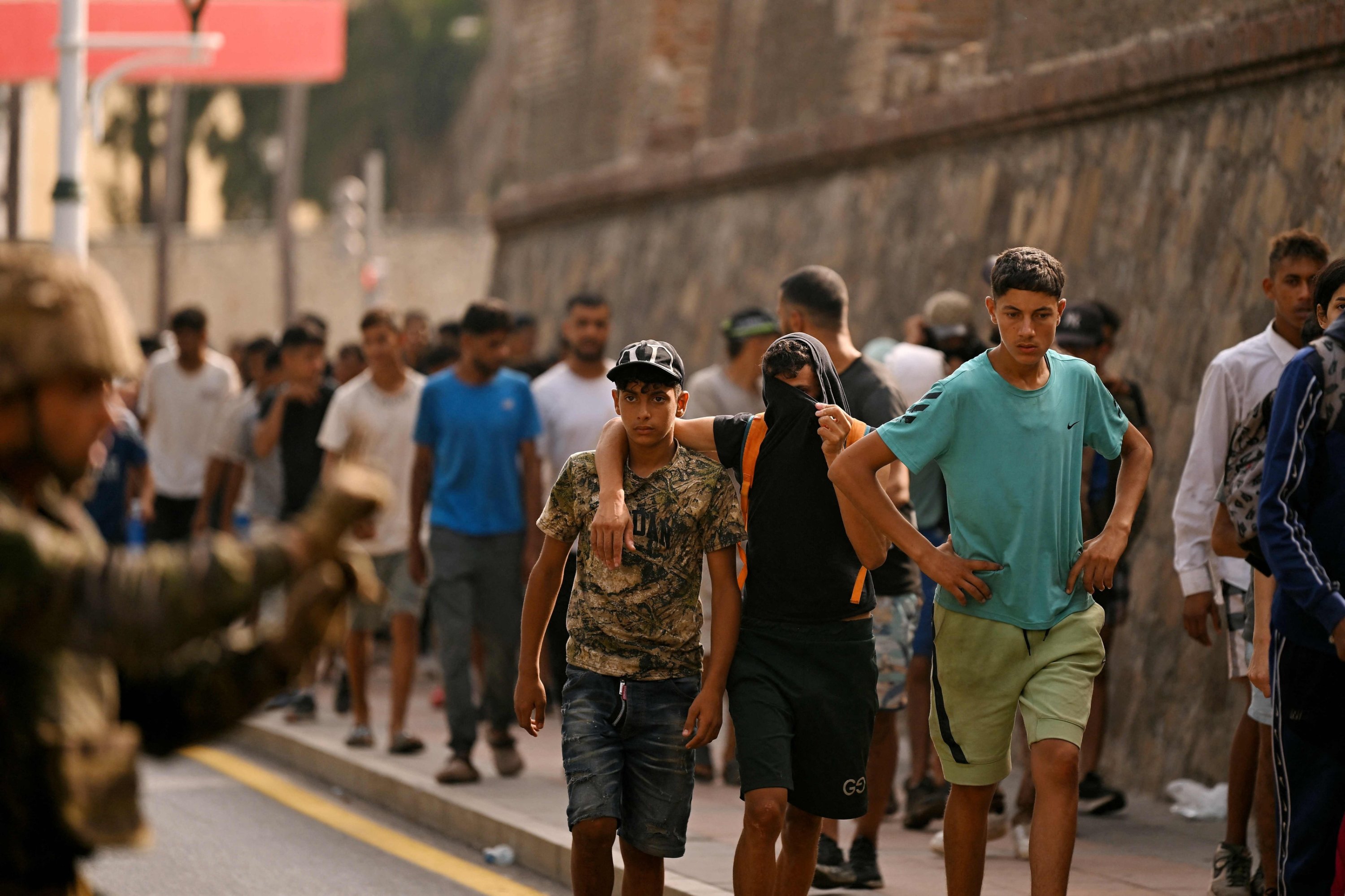
The Spanish exclave witnessed one of its largest migration crises, as up to 60,000 Moroccans breached its borders and arrived in the city, seeking asylum

“We are relentless against those who break the law,” Spanish Interior Minister Fernando Grande-Marlaska told journalists in Ceuta

Italy does not share a land border with Spain, but the measure — which looks certain to anger Madrid — will impact people travelling by plane or boat between the two countries, meaning they will need to show a…

Spanish police began installing a 500-meter floating sea barrier on Ceuta's border with Morocco this Saturday (1st), following an attempted mass entry of migrants that left at least 67…
The mass arrival, in recent days, of around 60,000 migrants from Morocco to the Spanish exclave of Ceuta, in North Africa, has triggered a migratory and political crisis for the Spanish government. Look…
Migrants who swam or jumped fences to enter the Spanish exclave of Ceuta, in North Africa, began making the journey back this Saturday. Many reported that the hunger, exhaustion and hostility of…
While most of the 50,000 people who entered the Spanish enclave in Morocco on Thursday July 30 have already left, Giorgia Meloni's Italy wants to suspend Spain from the Schengen area.
While 50,000 people, mostly young Moroccans, rushed to the Spanish enclave on Thursday and Friday, Ceuta is now deserted, most of the candidates for exile having turned around.
The inhabitants in the square against the "fascists". Feijóo arrives and denounces: "Premeditated occupation of European soil".
The former minister and founder of Sant'Egidio: "I don't see the need for the Italian blockade. In 2023 the EU showed solidarity in Lampedusa"
The former High Representative: "The letter from Meloni and the others is dangerous. The right is trying to create fears and cause fractures"
The Spanish writer: "The crisis questions the conscience of Europe. Migration policy failed"
From Trump to the European right, via Moscow and Ben-Gvir: the Spanish case is a pretext for a hybrid attack on the EU
The government monitors the inconveniences at the airports: the possibility of shortening border controls from Madrid
Migrants who swam or jumped over fences to rush into Spain's African enclave of Ceuta were returning home on Saturday, with many saying hunger, exhaustion and hostility from locals had crushed their hopes of a new…
Spanish authorities said about 50,000 people had crossed into Ceuta by land and sea from Thursday in an unprecedented surge at one of the EU's only land borders with Africa.
Tens of thousands of migrants crossed into Ceuta from Morocco on July 29, triggering alarm in Europe.
FNIDEQ, Morocco/CEUTA, Spain, Aug 1 - Migrants who swam or jumped over fences to rush into Spain's African enclave of Ceuta this week were returning home on Saturday, with many saying hunger, exhaustion and hostility…
France and Italy bolstered border controls on Saturday after about 60,000 people crossed into Spain’s enclave in North Africa, sparking one of the largest migrant crises for the European Union in recent years. The…

The irregular arrival of more than 60,000 migrants in less than 24 hours unleashed unprecedented reactions, inside and outside European territory.

According to Spanish authorities, the crisis has caused at least 57 deaths, but there are fears that the number will increase.
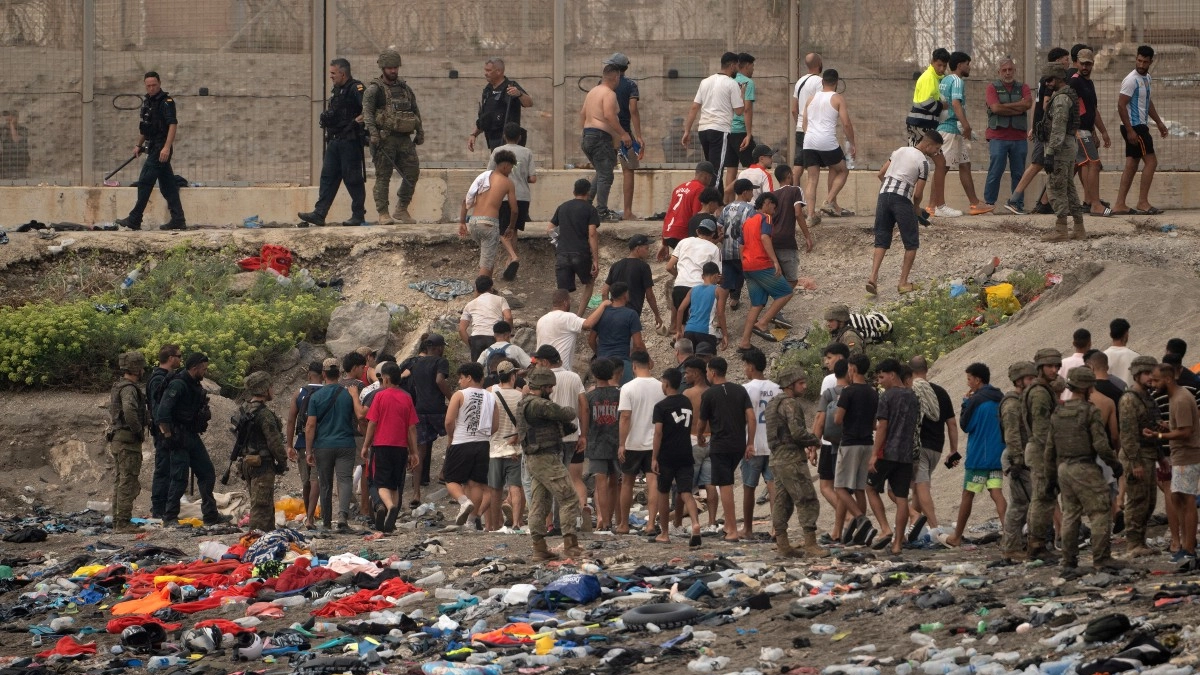
This episode is part of one of the worst crises that the autonomous city of barely 84,000 inhabitants has experienced in recent years.

This territory has an approximate population of 85,000 inhabitants and is a reference point for the lines that connect Asia with Europe and America.
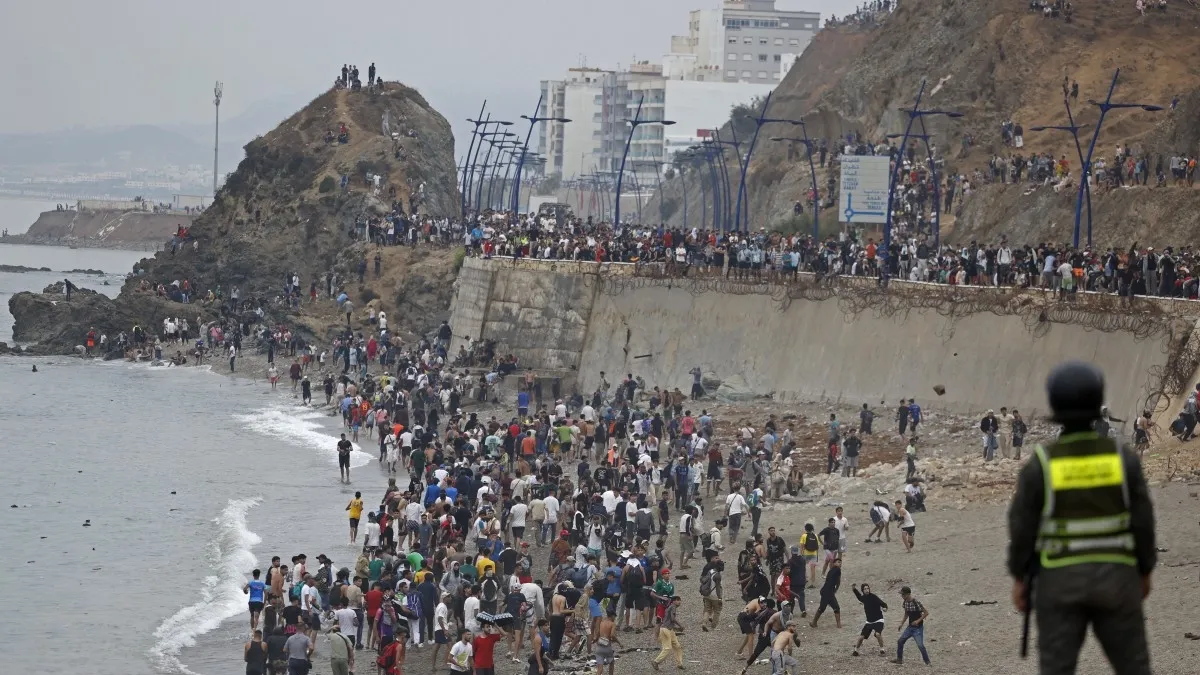
Circulating clips and rumors about opening the borders prompted thousands of Moroccans dreaming of emigrating to head towards Ceuta, which is under Spanish sovereignty, but many of them returned days later recounting an experience different from what they had imagined.
The repercussions of the migration crisis began to appear after the return of large numbers of irregular migrants to Morocco, while the Spanish authorities are seeking to contain the situation amid fears that the effects of the crisis will expand beyond the immigration file.