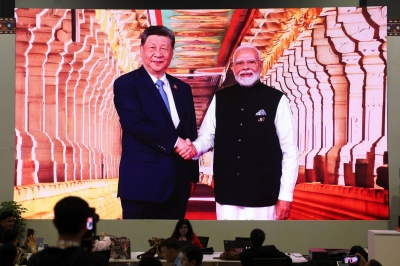
Iran war reshapes Brics ties but also exposes divisions
Brics members agree they need a new global order but it's harder to answer what should replace it and how to get there.

The 18th BRICS Summit in New Delhi produced calls for a new global order amid Iran war pressures, with India claiming a diplomatic win through reform pushes, while the bloc's internal divisions over Iran's war...
The Hindu leads by characterizing the 18th BRICS Summit in New Delhi as a significant diplomatic achievement for India, emphasizing India's success in pushing reforms in global governance structures. BBC News frames the same summit as exposing BRICS's fundamental inability to agree on what should replace the current global order, leading with the observation that while members agree a new order is needed, consensus on its form and path to implementation is lacking.
TASS quotes an Indian expert asserting that the summit proved the bloc's ability to find common solutions despite its members' diverse political systems, framing institutional effectiveness. Al Jazeera Arabic focuses on Iran's strategic reliance on BRICS as a mechanism to reduce sanctions impact through financial and trade alternatives, rather than genuine new-order institution-building. Daily Sabah reports Modi's Sunday call for stronger Global South cooperation as he warned of geopolitical tensions. Times of Israel reports BRICS members seeking to bridge gaps between Iran and UAE while condemning unilateral war. The National frames BRICS's strength as lying in bridge-building rather than bloc formation. Japan Times reports Xi and Modi's thaw during Saturday meetings, noting they agreed to promote cultural exchanges and coordinate on regional issues, while acknowledging deep divisions between the Asian rivals.
Iran war reshapes BRICS ties but also exposes fundamental divisions
Why the BRICS summit was a major diplomatic win for India
BRICS summit proved the group's ability to find common solutions
BRICS summit ends with call for greater Global South cooperation
BRICS bloc seeks to condemn unilateral war and bridge Iran-UAE gap
Iran's stakes in BRICS amid sanctions pressure and international isolation
Xi-Modi thaw at BRICS masks deep divisions between Asian rivals
Whether the BRICS summit's anti-unilateral-war declaration will have any practical effect on the US-Iran conflict or on member states' bilateral relations with Washington remains unconfirmed.
Coverage largely omits economic cooperation outcomes and concrete trade agreements reached at the summit; the role of newer BRICS members like Saudi Arabia and UAE in shaping summit outcomes is underreported.
BBC News frames the BRICS summit as reshaping bloc ties due to the Iran war while exposing fundamental divisions about what should replace the current global order and how to achieve it.
The Hindu frames the BRICS summit as a major diplomatic win for India, emphasizing Indian-led reform pushes and India's positioning as a bridge builder between competing blocs.
TASS reports an Indian expert emphasizing BRICS proved its ability to find common solutions among countries with different political systems, framing it as a state capability achievement.
Daily Sabah reports Modi calling for stronger Global South cooperation at the summit's close, with Turkey positioning itself as aligned with Global South institutional strengthening.
Times of Israel reports BRICS moving to condemn all unilateral war as members seek to bridge the gap between Iran and UAE, framing it as a geopolitical positioning exercise affecting the Iran conflict.
The National frames BRICS's strength as lying in being a bridge rather than another bloc, reflecting UAE interest in using the grouping for regional resilience rather than confrontational anti-Western alignment.
Al Jazeera Arabic frames Iran's use of BRICS as a mechanism to reduce sanctions impact through alternative financial and trade channels, framing it as Iran's strategic leverage play.
Japan Times covers the Xi-Modi BRICS meeting as masking deep India-China divisions despite agreement to promote cultural and business exchanges and coordinate on regional issues.
This page maps the coverage. The 8 articles below are the original reports the comparison is drawn from — open them for each publisher's full reporting.
Brics members agree they need a new global order but it's harder to answer what should replace it and how to get there.
The 18th BRICS Summit in New Delhi is being seen as a significant diplomatic achievement for India. From pushing reforms in global governance to strengthening trade cooperation and facilitating dialogue among rival…

Индийский специалист в области международной политики подчеркнула, что объединению, куда входят страны с разными политическими системами и стратегическими интересами, удалось "преобразовать разногласия в консенсус"
Indian Prime Minister Narendra Modi on Sunday called for stronger cooperation across the Global South as he warned that geopolitical tensions, disrupted supply chains and climate c...
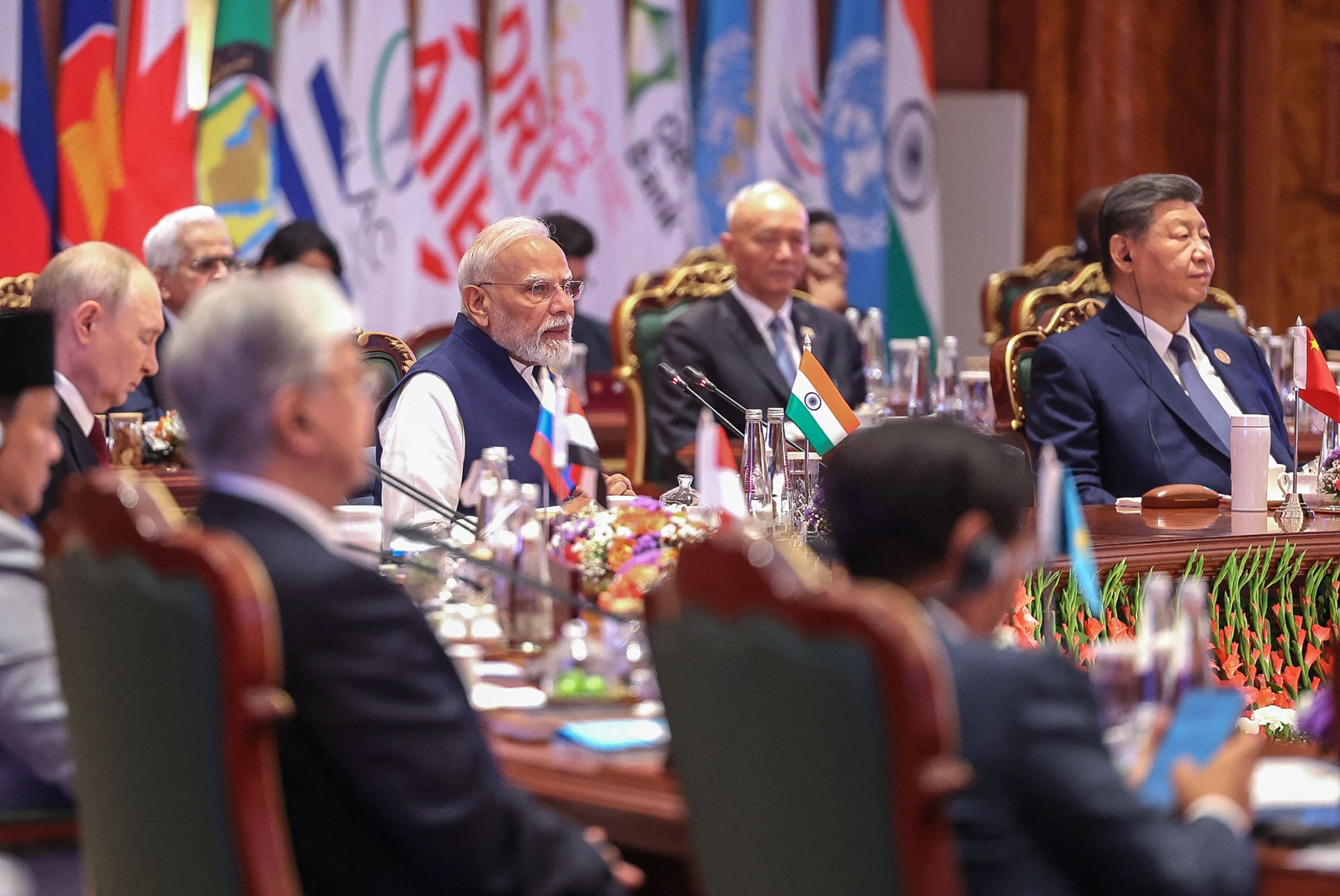
BRICS bloc to condemn all unilateral war as members seek to bridge gap between Iran, UAE -- sources The Times of Israel

تراهن إيران على بريكس لتقليص أثر العقوبات عبر بدائل مالية وتجارية أوسع، بالتوازي مع توظيفها سياسيا لمواجهة العزلة والضغط الأمريكي.
In a meeting Saturday, the two leaders agreed to further promote cultural and business exchanges, and coordinate on regional and global issues.