How the world covered it

AI Investment and Corporate Competition

A global AI investment race is accelerating simultaneously on multiple fronts: the EU is pursuing a digital euro to reduce US tech dependence, Google is losing talent to OpenAI and Anthropic, South Korea's...

Editorial comparison

Global AI investment accelerates across multiple fronts; outlets diverge on whether competition damages Google or creates stability for chip producers.

Le Monde frames AI competition as damaging to incumbent Google: 'Google is having its talents in artificial intelligence poached by OpenAI and Anthropic,' with 'Alphabet falling on the stock market, while overinvestments continue and a price war in AI.' The outlet treats the landscape as one of market instability and winner-take-all consolidation.

Japan Times frames AI as creating structural stability for South Korean memory chip producers: 'In South Korea, a job or partner at Samsung or SK Hynix is the new A+ catch,' suggesting that AI demand is strengthening these companies' market position and labour desirability. The outlet treats AI boom as beneficial structural consolidation.

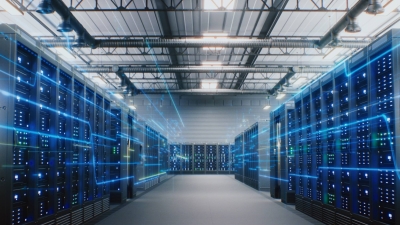
ABC Australia reports the South Australian government 'pushing for the state to become home to billions of dollars' worth of artificial intelligence data centres,' emphasising pro-AI government positioning. CNA reports 'EU bets on digital euro to cut US tech addiction' — framing AI competition as geopolitical dependency reduction.

How each outlet opened the story
Le Monde France

Google is having its talents poached by OpenAI and Anthropic

Japan Times Japan

In South Korea, job at Samsung or SK Hynix is new 'A+' catch

ABC Australia Australia

SA pushes for AI data centres as industry says it's not asking for subsidies

Coverage map

What coverage agrees on, contests, or leaves unclear.

Broadly agreed
  • Multiple sources confirm AI infrastructure investment is accelerating globally, with Japan, Australia, South Korea, and the UAE all reporting major AI-related investments in this cycle.
  • Both The Hindu and Daily Maverick confirm the Five Eyes alliance has issued warnings about AI's offensive cyber capabilities — confirming AI's dual-use security implications are now formally acknowledged by governments.
Contested framing
  • Le Monde frames AI competition as damaging to incumbent Google and producing market instability; Korea Herald frames AI as creating structural stability for South Korean memory chip producers — opposite economic consequence assessments.
  • Australian students protesting AI (ABC Australia) contrasts sharply with the South Australian government's pro-AI data centre push in the same news cycle — a domestic divergence between civic and governmental AI framings.
Still unclear

Whether the EU digital euro will achieve adoption sufficient to meaningfully reduce US tech platform dependence, and whether South Australian AI data centres will attract sufficient private investment without subsidies, remain unverified.

Notable omissions

The energy consumption implications of the global AI data centre buildout — a major environmental concern — are almost entirely absent from AI coverage across all outlets in this cycle.

Regional framing

How different outlets describe the same story.

French

Le Monde reports Google's parent Alphabet is losing AI talent to OpenAI and Anthropic while its stock falls and a price war in AI intensifies, framing it as a structural competitiveness challenge for incumbent tech giants.

French

Le Monde separately reports SpaceX stock continuing to decline after its IPO — third session in a row — framing it as a correction following overinvestment expectations.

Singaporean

CNA reports the EU betting on a digital euro to cut US tech addiction, framing it as a strategic infrastructure sovereignty move against American platform dominance.

Australian

ABC Australia reports the South Australian government pushing for AI data centres worth billions, with industry saying it is not asking for subsidies — framing it through public-private governance and regulatory design.

Australian

ABC Australia separately covers high school students protesting AI amid growing national concerns, providing a counternarrative to the infrastructure investment story.

South Korean

Korea Herald, citing CLSA analysis, reports South Korea's memory chip industry is moving beyond its traditional boom-and-bust cycle as AI demand creates structural stability — framing AI as transforming Korean corporate resilience.

Chinese

SCMP examines the I Ching-Leibniz-AI historical connection, positioning Chinese intellectual heritage as foundational to modern AI development — a cultural legitimacy framing for Chinese AI leadership.

Japanese

Japan Times reports Brookfield planning to invest over $10 billion in Japan over five years for AI infrastructure, framing it through corporate partnership and trade relationship stability.

Emirati

The National reports the WEF unveiled top 10 emerging technologies for 2026, and covers AI deployment for both cyber attacks and defences — framing AI through regional innovation and security lens.

Singaporean

Straits Times reports a probe of California petrol stations accused of using AI to inflate prices — framing AI through consumer protection and regulatory accountability.

American

CNN covers a chatbot attempting to solve AI's news problem, framing AI through media industry disruption and journalism sustainability.

Source trail

Original reporting behind this perspective.

This page maps the coverage. The 17 articles below are the original reports the comparison is drawn from — open them for each publisher's full reporting.

Show 17 source articles
Perspective link copied