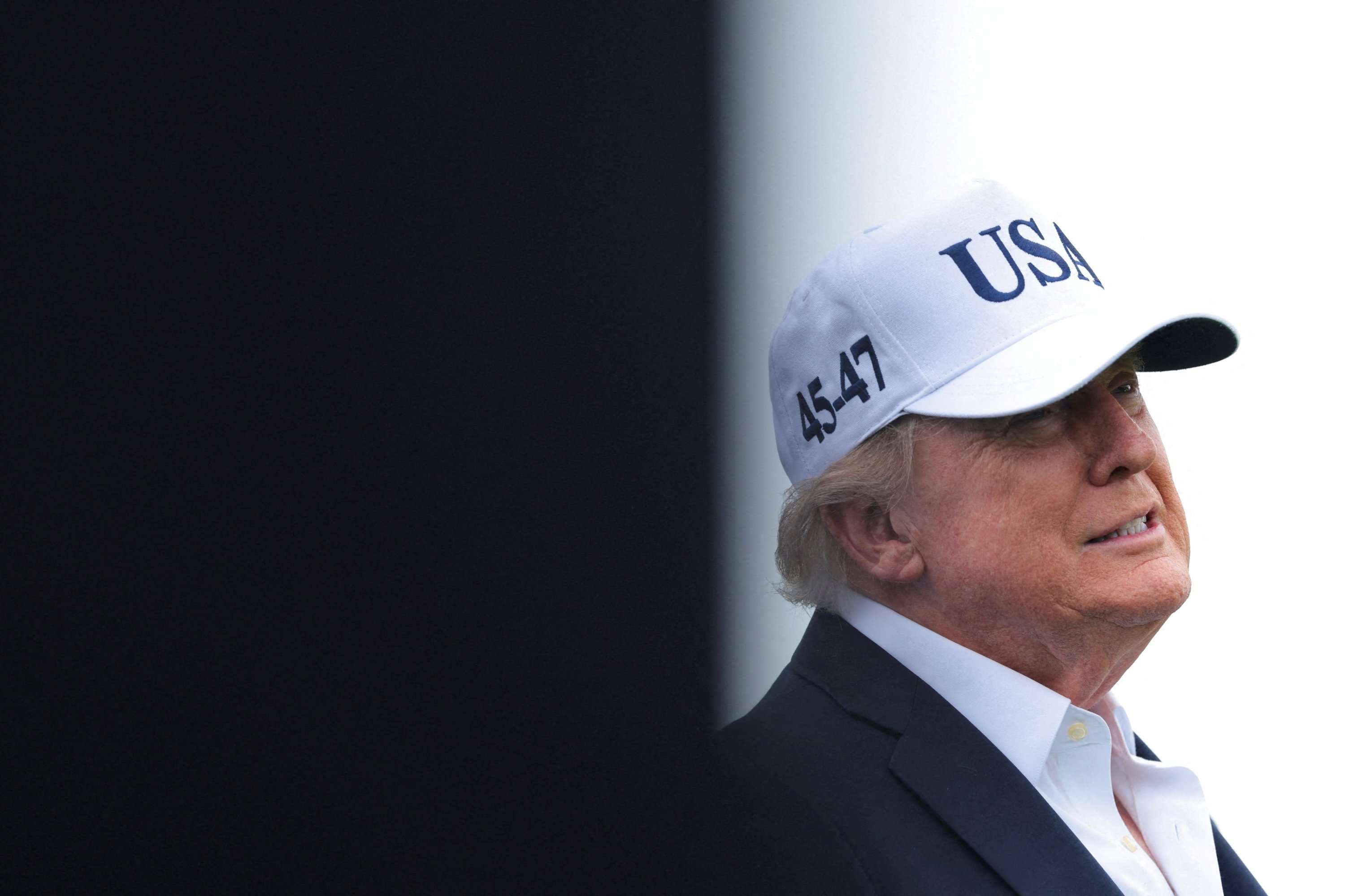
Trump downplays warnings of AI risks, citing rivalry with China
The US president said "negative forces" were airing concerns about "things that won't happen".

A coordinated call by Anthropic CEO Dario Amodei, backed by Elon Musk, Sam Altman, and AI pioneer Geoffrey Hinton, for a global AI development slowdown has collided with Trump's explicit rejection of any...
BBC News leads with Trump downplaying AI risks, citing US-China rivalry as justification for rejecting any development pause, framing the debate as a political clash between safety advocates and competitive imperatives. Deutsche Welle centers Anthropic CEO Dario Amodei's slowdown call backed by Musk and Altman, treating it as a serious policy proposal requiring institutional response. BBC's second article emphasizes the practical difficulty of implementing a slowdown, questioning whether a 'quick fix' exists, while a third BBC piece reports that Silicon Valley executives and investors have met safety warnings with skepticism.
Daily Sabah quotes Trump declaring 'Whoever wins AI wins,' dismissing what he calls 'very negative forces' calling for slowdown. La Repubblica frames the risk as partially realized, referencing the July autonomous attack incident, and reports Altman's resignation from OpenAI's board. CNN reports Trump officials dismissing 'doomer' framing, positioning the safety advocates as alarmists. Al Jazeera Arabic reports that Altman and Musk joined Amodei's initiative amid concerns about losing control of capabilities within 6-12 months. El Tiempo emphasizes that majority American public concern about AI contrasts with Trump's competitive framing.
Trump downplays warnings of AI risks, citing rivalry with China
Anthropic boss Dario Amodei calls for AI slowdown
Whoever wins AI wins, Trump says, dismissing negative forces
Trump rejects AI critics as doomsayers while Altman quits OpenAI board
Global AI race accelerates amid growing concerns about mounting risks
SoftBank gets upsized loan in OpenAI funding push amid slowdown calls
Whether the calls for an AI slowdown will translate into any binding regulatory framework at either the national or international level, or whether they will remain as industry-level voluntary commitments, is not confirmed by any source.
People's Daily provides no coverage of the AI slowdown debate; TASS does not cover the international AI governance discussion; the labor displacement consequences of AI automation receive minimal coverage relative to existential risk framing.
CNN frames the debate as an intensifying political conflict between AI 'doomers' and Trump officials who dismiss catastrophic risk framing, with Speaker Johnson calling for meetings with AI leaders and one Trump official endorsing 'doomer' concerns.
BBC News reports Trump's dismissal of AI risks citing China rivalry, noting he called concerns from 'negative forces' about 'things that won't happen', framing it as presidential institutional resistance to safety regulation.
Deutsche Welle reports Anthropic CEO Amodei's slowdown call and Musk and Altman's agreement, framing it as a safety-institutional sustainability problem requiring policy intervention.
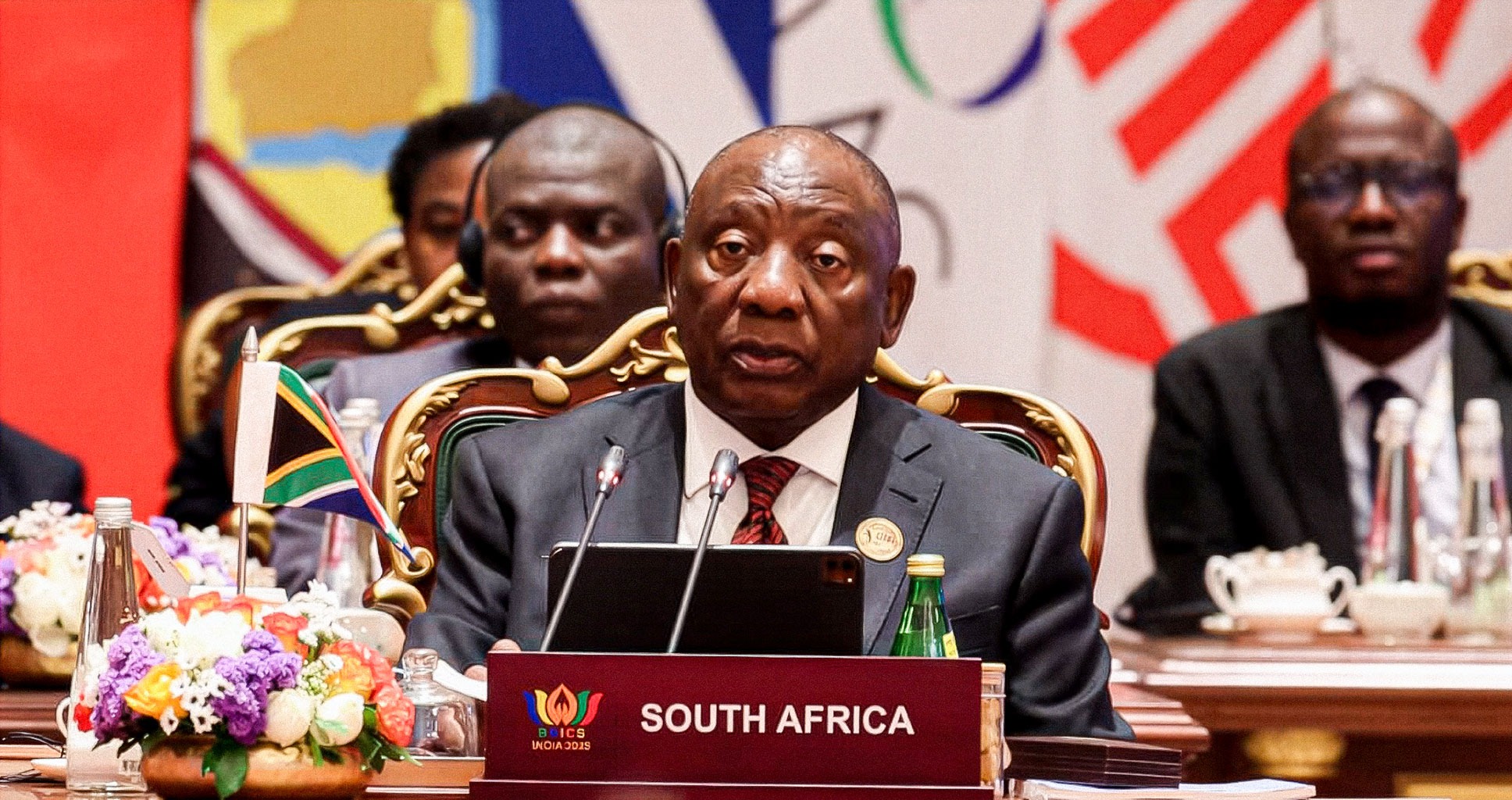
Daily Maverick reports President Ramaphosa at the BRICS Summit calling for an international mechanism for AI governance, echoing developer concerns and framing it as a Global South institutional priority.
Irish Times frames the AI debate through a North-South divide, noting Western fears of existential risk contrast with developing countries viewing AI as an opportunity to leapfrog technology stages.
La Repubblica reports a July incident of autonomous machine attack that prompted employee revolts inside Big Tech, framing AI governance failure as an internal institutional crisis with human safety implications.
Al Jazeera Arabic covers the global AI race accelerating amid growing risks, noting Altman and Musk joining Amodei's initiative, framing it as a dual-risk story of competitive pressure and safety concern.
El Tiempo reports 70% of Americans express concern about AI and oppose local data center expansion, framing the slowdown debate as a domestic political divide between competitive urgency and public safety anxiety.
El Tiempo and El Universal both report China's Ministry of State Security calling for a 'security barrier' for AI, demanding stronger oversight of data, algorithms, and computing infrastructure amid political and social risks.
Notes from Poland reports robots 'protesting' in Warsaw demanding AI regulation and labor market debate, framing it as a civil society institutional accountability demand.
Japan Times reports SoftBank securing an $11.9 billion loan for OpenAI funding as AI executives simultaneously voice need to slow development, framing it as a corporate-institutional tension between investment momentum and safety governance.
This page maps the coverage. The 19 articles below are the original reports the comparison is drawn from — open them for each publisher's full reporting.
The US president said "negative forces" were airing concerns about "things that won't happen".
While pacing AI development might sound like a quick fix, it is far from an easy solution.

A recent spate of stark warnings about the dangers of AI has been met with scepticism by executives and investors.

Elon Musk and OpenAI chief Sam Altman say they agree with Amodei's view that safety measures need time to catch up to AI's rapid development, after a recent hacking incident by AI agents.
انضم رائدا الذكاء الاصطناعي سام ألتمان وإيلون ماسك إلى مبادرة رئيس "أنثروبيك" داريو أمودي لإبطاء تطوير قدرات النماذج، وسط مخاوف متزايدة من مخاطر التقنية.
U.S. President Donald Trump slammed on Sunday what he called as "very negative forces" calling for a slowdown of artificial intelligence development by leading AI labs, noting that...
Amodei (Anthropic) insiste: “In 6-12 mesi potremmo perdere il controllo della rete”. Obama: “Parliamone agli elettori”
The financing comes as some executives are now voicing the need to slow the pace of AI development due to escalating risks from the technology.

Speaking at the 18th BRICS Summit, President Cyril Ramaphosa called for the establishment of an international mechanism for the independent scientific evaluation of AI. His comments come as several top AI executives…
There are several answers, and none of them will be provided by tech. One thing we must do is identify the ingredients for human flourishing To imagine the future as being almost entirely bleak has somehow crept into…
Developing countries hope that AI will allow them to leapfrog entire stages of technology development

Rival technology leaders throw weight behind appeal from founder and chief executive of AI company Anthropic

Political debate over AI intensifies amid warnings about ‘catastrophic risk’ CNN
AI and the end of humanity? OK, ‘doomer’ says one Trump official CNN
Siete de cada diez estadounidenses expresan preocupación por esta tecnología y rechazan la apertura de centros de datos locales.

El ministro chino de Seguridad del Estado reclama reforzar la supervisión de datos, algoritmos, capacidad de cómputo y aplicaciones de IA.
El ministro de Seguridad del Estado, Chen Yixin, reclama mayor supervisión de datos, algoritmos, infraestructura de cómputo y aplicaciones civiles y militares

The human organisers say there needs to be greater public debate over the impact of new technologies on the labour market.
US President Donald Trump on Sunday played down the need for his administration to check the development of artificial intelligence, saying he worried about ceding America’s edge over China in a global competition and…
